
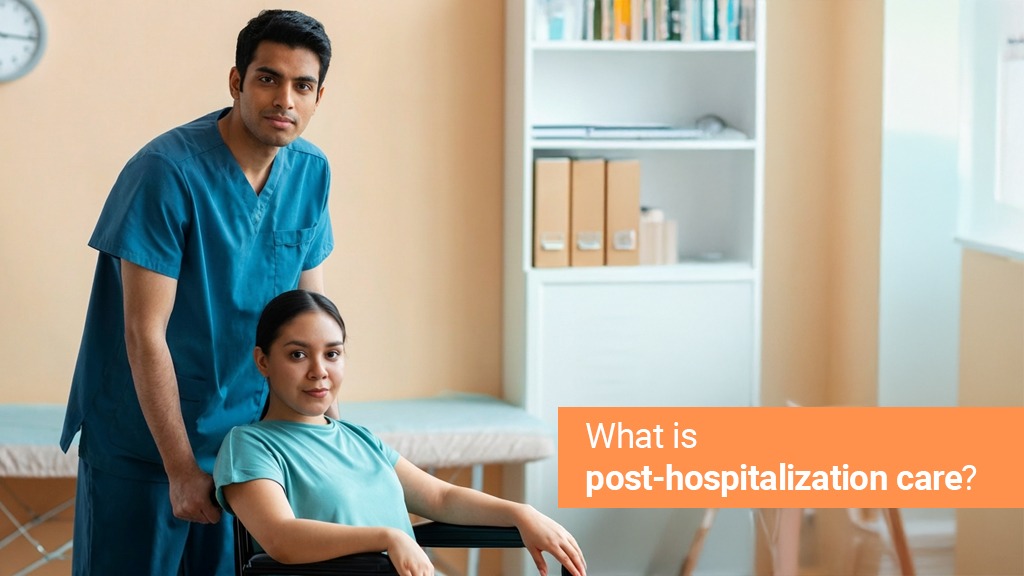
Understanding the Importance of Post-Hospitalization Care
The day when a patient leaves the hospital is usually considered a victorious one. The physicians nod in approval, the nurses smile in return, and the family releases a unified sigh of relief. After days, sometimes weeks, of staring at monitors and missing sleep, the family finally gets to go home.
What most families, however, only find once they leave those hospital walls is that discharge is not the final part of the recovery. As a matter of fact, it is only a start for many patients.
It may be the post-surgical period, the post-stroke period, the post-heart episode period, or the post-long medical stay period, but either way, the period after hospital life to home life is one of the most vulnerable parts of the healing process. And the reality is that the majority of people are not ready to receive it.
Comfort is home, but recovery requires more than comfort.
Home is something much-needed, the smell of your cook stove, your pillow, the familiarity of loved ones. Patients, too, are usually cheerful when they get back to their own environment. However, medical needs cannot be dealt with by comfort alone.
The family suddenly has to assume the role of medicine administrators, dressing aids, physical therapy proponents, and emotional stabilizers. The kind and professional assurance of the hospital personnel is no more. The regimented routine is gone. All the support is now the loved ones’ responsibility, who usually don’t know where to begin.
It is here that the significance of post-hospitalization care really comes into the picture.
The crucial days after hospital discharge
The thing that most people fail to understand is that patients are the most susceptible in the first couple of weeks of being back home. Weakness, pain, confusion, appetite changes, mobility problems, medication side effects, etc., are all very common.
A lot of patients conceal their pain so as not to bother their families. Others get into the flow of things and even end up hurting themselves. Some are emotionally distressed and nervous because they no longer have the full-time medical attention.
When the whole family works, the issue of caring is soon turned into a stressful juggling process. Nights become restless. Days feel long. The anxiety of ‘What-if-Something-Happens’ hangs in the air.
Professional post-hospitalization care relieves this load.
The importance of post-hospital care
- To minimize the risk of complications- The body cannot function fully after an illness or an operation. Complications can be caused by such simple things as missing a dose, missing a meal, or getting up too fast. There are trained caregivers and nurses who are aware of the warning signs to be careful of, preventing infections, relapses or other mishaps. They assist the patient in curing safely.
- To provide appropriate management of medications and follow-ups- The discharge summaries are sometimes confusing. Medication lists change. Dressings should be frequently changed. Appointments must be kept. Post-hospital care means nothing is missed and no effort is wasted.
- To facilitate physical recovery- Numerous patients require physiotherapy, mobility, training, or breathing and muscle-strengthening exercises. Unless directed professionally, they will not make any progress or overwork themselves at too early a stage. Post-hospital rehabilitation after discharge helps them here and takes them gradually back to independence.
- To offer emotional and mental support- Healing is not just physical. Some patients feel low. Some feel scared. Others are dependent and frustrated. Some develop post-hospital fatigue and mild depression. A professional and trained caregiver is the one who listens, inspires, and restores some sense of normalcy.
- To reduce stress on families- Family members usually take on more than they are in a position to manage. They might be able to say nothing, but sleep deprivation, continuous anxiety, and physical discomfort take a toll. Post-hospital care also provides families with room to relax, rest, and revitalize without any sense of guilt.
- To make little things count- Most families refer to post-hospital caregivers as a blessing not only to the patient but to the whole family. Like the daughter who said,
“And I could at last sit down with my mother and talk to her like a daughter, and not her nurse.”
Or the old man who mumbled, “I felt secure at home as someone was aware of what my body required more than I was.”
These are little things that count and tend to be the most important in the healing process.
The benefits of post-hospitalization care
Post-hospitalization care can restore the lives of people in the most natural manner possible when carried out properly. It makes them sit up once again with no fear. Walk again without pain. Take food once more without challenge. Sleep with peace. Heal with confidence.
Additionally, it provides families with assurance and independence for the patients.
But most importantly, it gives everyone hope.
A disease may be treated at a hospital, but true healing happens after discharge with the right kind of post-hospital care managed by experienced and skilled medical staff with patience, perseverance, and the gentle care that helps people return to normalcy with confidence.
BY: Sukino
COMMENTS: No Comments