


The Moment Nobody Prepares You For
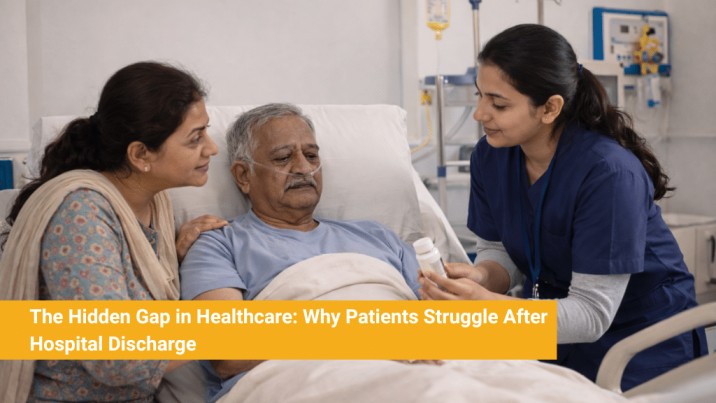
The doctor smiles, hands you a discharge summary, and says, “You’re good to go.” For a family that has spent weeks in anxious vigil by a hospital bed, those words should feel like relief. But for many, they mark the beginning of an entirely different kind of struggle — one that nobody warned them about.
Discharge does not mean recovery. It means the hospital has done its part. What happens next — the weeks of rehabilitation, the daily wound care, the medication schedules, the emotional weight of watching a loved one relearn how to walk or speak — falls largely on families who were never trained for any of it. This is the hidden gap in Indian healthcare, and in Bangalore, one of the country’s most medically advanced cities, thousands of patients fall through it every single year.
The Hidden Gap in Healthcare
India’s hospitals have made remarkable strides. Surgical outcomes are improving, ICU survival rates are rising, and complex procedures that once required foreign travel are now routine in Bangalore. But the healthcare system, for all its progress, largely ends at the hospital gate.
There is no structured recovery roadmap handed to most patients. Discharge notes are often clinical and jargon-heavy. Families are told to “follow up in two weeks” without clarity on what to watch for in the interim. Caregivers — usually a spouse, an adult child, or a hired attendant with little medical training — are expected to manage a recovering patient whose needs may be intensive and rapidly changing.
The result? Confusion, fear, and critically, gaps in post hospitalization care that directly affect how well and how quickly a patient recovers. The transition from hospital to home is one of the most vulnerable phases in any patient’s journey, and it is routinely left unmanaged.
What Goes Wrong After Discharge
The consequences of this gap are not abstract. They show up in emergency readmissions, in infections that develop from improperly managed wounds, and in recoveries that plateau because rehabilitation was delayed by weeks.
Delayed rehabilitation is among the most common and damaging outcomes. After a stroke, a fracture, or cardiac surgery, the window for optimal recovery is time-sensitive. Every day without structured physiotherapy or occupational therapy is a day the body has to work harder to regain function later. Yet most families, unfamiliar with medical protocols, wait — sometimes for weeks — before arranging any formal rehabilitation support.
Improper care at home follows closely. Without trained nursing care at home, patients may develop pressure sores from incorrect positioning, aspirate food due to improper feeding techniques, or miss critical warning signs of complications. The gap between what a recovered patient needs and what an untrained family can realistically provide is often enormous.
This is precisely why caregiver services that are medically supervised — not simply companionship — are essential. A caregiver who understands vitals, medication interactions, and mobility support is not a luxury; for high-risk patients, they are a medical necessity.
Increased complications — readmissions, infections, delayed wound healing, psychological deterioration — are the predictable outcome when this gap goes unaddressed.
What Patients Actually Need: A Continuum of Care
Recovery is not an event. It is a process, and it requires a continuum of support that moves with the patient from acute hospitalization toward independence. This is the philosophy behind continuum care — an integrated approach where every phase of recovery is planned, coordinated, and professionally managed.
For patients who are medically stable but not yet ready to return home, an inpatient rehabilitation center provides the bridge. Here, structured therapy programs — physiotherapy, speech therapy, occupational therapy — are delivered in a monitored environment, dramatically improving outcomes compared to home-based recovery without professional oversight.
For those who prefer or need to recover at home, out of hospital care delivers clinical-grade support directly to the patient’s doorstep. This is not home nursing from decades past — it is evidence-based, physician-supervised care that mirrors many aspects of a clinical setting, in the comfort and dignity of a familiar environment.
The Role of Rehabilitation in Recovery
Rehabilitation is where recovery truly happens. And it is far more specialized than most people realize.
Neuro rehabilitation supports patients recovering from neurological conditions — brain injuries, spinal cord disorders, and conditions affecting motor and cognitive function. Stroke rehabilitation specifically focuses on restoring speech, mobility, and daily function after a cerebrovascular event, ideally beginning within days of the stroke itself.
Orthopaedic rehabilitation is essential after joint replacements, fractures, and musculoskeletal surgeries — helping patients regain strength, range of motion, and the confidence to move safely. For those recovering from heart procedures or events, cardiac rehab reduces the risk of future episodes while rebuilding stamina and cardiovascular health through structured exercise and lifestyle support. Patients undergoing treatment for cancer benefit from cancer rehab, which addresses fatigue, weakness, and functional decline that oncology treatment itself can cause.
Access to the best rehabilitation center in Bangalore — one equipped to handle this full range of conditions — makes a measurable difference in how completely a patient recovers.
Advanced Recovery Support for Complex Cases
Some patients require care that goes beyond what a standard rehabilitation program or home visit can provide. For those with prolonged, medically complex recovery needs, long term acute care services offer a solution that fills the space between hospital and home.
Sukino operates Long Term Acute Care facilities at Sarjapura and Kanakapura, providing round-the-clock medical supervision combined with active rehabilitation — an essential combination for patients managing ventilator dependency, multi-system complications, or slow-healing conditions.
For elderly patients or those who need a structured, supportive environment beyond acute care, assisted living centers offer residential care with medical oversight and quality of life at the forefront. Transitional care services help patients move safely between levels of care — from ICU to ward, from hospital to rehabilitation, from facility to home — with coordination that prevents the dangerous gaps that cause readmissions.
Specialized Therapies That Make a Difference
Recovery is not one-size-fits-all. Sukino’s specialized therapy programs address conditions and populations that standard rehabilitation often underserves.
At the Bannerghatta Road facility, hydrotherapy uses the properties of water to reduce pain, improve mobility, and enable exercises that would be impossible on land — particularly valuable for orthopaedic and neurological patients. Pediatric rehabilitation addresses the unique developmental and recovery needs of children, from birth complications to childhood injuries. Parkinson’s rehabilitation provides targeted interventions to manage tremor, balance, and gait challenges. Trauma rehabilitation supports patients recovering from accidents and injuries, addressing both physical and psychological dimensions of recovery.
Home Healthcare: Clinical Care, Delivered to Your Door
For families searching for quality care “near me” that doesn’t require leaving home, Sukino’s managed home healthcare brings the clinic to the patient. Services include ICU at home for patients requiring high-acuity monitoring post-discharge, doorstep doctor services for regular medical review without the effort of hospital visits, and medical equipment at home — from oxygen concentrators to hospital beds — supplied and maintained for the patient’s duration of need.
This integration of home healthcare with rehabilitation and facility-based care is what makes a genuine continuum of care possible.
Why Families in Bangalore Choose Sukino
When families across Bangalore search for a trusted recovery partner — whether near Koramangala, HSR Layout, Bannerghatta Road, Manyata Hebbal, Whitefield, or Electronic City — Sukino’s presence across the city means expert care is always close. Beyond Bangalore, Sukino serves patients in Kochi (Vyttila) and Coimbatore (Nava India Road), reflecting a growing commitment to bridging the post-discharge gap across South India.
Sukino is widely regarded as among the best rehabilitation centers in Bangalore because of one core belief: that recovery deserves the same clinical attention and professional structure as the treatment that preceded it. Every patient who walks — or is wheeled — out of a hospital deserves a plan, a team, and a pathway to the best possible version of their recovery.
Plan the Recovery Before You Need It
The hidden gap in healthcare doesn’t have to claim your loved one’s recovery. The single most important step a family can take after a diagnosis or surgery is to ask: What happens after discharge?
Sukino exists to answer that question — with expertise, empathy, and an integrated care model designed around the patient’s full journey.
Contact Sukinotoday to speak with a recovery specialist, explore the right level of care for your situation, and build a structured recovery plan that gives your loved one the best chance at returning to the life they knew — or better.
Because discharge is not the finish line. Recovery is.


