


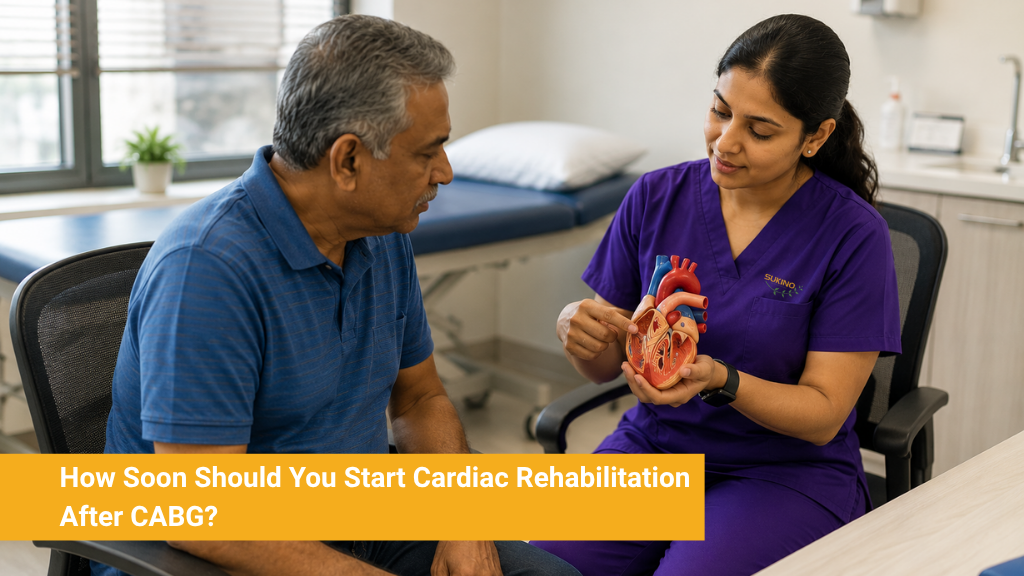
Undergoing coronary artery bypass graft (CABG) surgery is a major step in treating blocked or narrowed coronary arteries. But surgery is only one part of the recovery journey.
Once the procedure is complete, patients often want to know when they can start exercising, walking, or attending cardiac rehabilitation.
A common question is: How soon should cardiac rehabilitation start after CABG?
The answer depends on the patient’s medical condition and recovery. In many cases, rehabilitation begins with simple activities while the patient is still in the hospital and continues in a more structured form after discharge.
Starting at the right time can help patients gradually regain strength, improve physical function and return to their normal activities safely.
What Is Cardiac Rehabilitation After CABG?
Cardiac rehabilitation is a structured program designed to help patients recover after heart surgery and other cardiac events.
After CABG, rehabilitation may include:
- Supervised physical activity
- Physiotherapy
- Breathing exercises
- Walking and endurance training
- Monitoring during exercise
- Nutrition guidance
- Lifestyle modification
- Education about heart health
- Support for returning to everyday activities
The program is adjusted according to the patient’s health, surgical recovery and exercise tolerance.
When Does Cardiac Rehabilitation Begin After CABG?
Cardiac rehabilitation can begin earlier than many patients expect.
During the Hospital Stay
The first stage may begin while the patient is still in the hospital.
Once medically stable, the healthcare team may encourage:
- Sitting out of bed
- Standing with assistance
- Short walks
- Breathing exercises
- Gentle mobility exercises
The purpose at this stage is not to build cardiovascular fitness. It is to prevent prolonged inactivity, improve mobility and help the patient become ready for discharge.
After Hospital Discharge
After discharge, rehabilitation continues as the patient becomes stronger.
The timing of a structured cardiac rehabilitation program depends on factors such as:
- The patient’s medical stability
- Type and complexity of surgery
- Heart function
- Wound healing
- Physical strength
- Other medical conditions
- The treating cardiologist’s recommendations
Some patients may be ready to begin a structured program relatively soon after discharge, while others may require additional recovery time.
There is no single start date that is appropriate for every CABG patient.
Why Should You Not Wait Too Long?
After major heart surgery, it is natural to feel tired and cautious about physical activity.
However, prolonged inactivity can contribute to muscle weakness, reduced endurance and loss of independence.
A structured rehabilitation program helps patients increase activity gradually rather than trying to do too much too soon.
The goal is to find the right balance between rest and safe movement.
What Happens During Early CABG Rehabilitation?
Early rehabilitation usually focuses on basic functional recovery.
- Walking
Walking is gradually increased according to the patient’s tolerance. The focus is on building endurance without excessive fatigue or symptoms.
- Breathing Exercises
Breathing exercises can help improve respiratory function following surgery and a period of hospitalisation.
- Mobility Training
Patients may need help with activities such as getting out of bed, walking, using stairs and performing everyday movements.
- Strength and Endurance
As recovery progresses, appropriately selected exercises can help rebuild strength and physical endurance.
- Clinical Monitoring
Depending on the patient’s condition and rehabilitation setting, healthcare professionals may monitor heart rate, blood pressure, oxygen saturation and symptoms during activity.
What About the Chest Wound?
CABG is commonly performed through open-heart surgery, which means the chest and breastbone need time to heal.
Patients should therefore follow their surgeon’s instructions regarding lifting, pushing, pulling, driving and upper-body exercises.
Rehabilitation does not mean immediately returning to strenuous exercise.
Instead, activity is progressed gradually while taking the surgical recovery into account.
Have Questions About Your Loved One's Recovery?
Ask a Rehabilitation Expert →Who May Need More Supervised Rehabilitation?
While some patients can continue their recovery at home, others may benefit from a structured rehabilitation centre.
This may include patients who:
- Are physically weak after surgery
- Had a prolonged ICU or hospital stay
- Need assistance with walking
- Have diabetes or hypertension
- Have other significant medical conditions
- Experience reduced exercise tolerance
- Are older adults with reduced independence
- Have limited caregiver support at home
For these patients, supervised rehabilitation can provide additional clinical and functional support during the recovery period.
Can You Start Cardiac Rehabilitation at Home?
Home-based rehabilitation may be appropriate for some patients.
A patient may be able to continue prescribed walking and exercises at home when medically stable and when appropriate professional guidance is available.
However, patients should not create their own exercise program immediately after CABG without discussing it with their healthcare team.
The intensity, duration and progression of exercise should be appropriate for the individual’s recovery.
How Long Does CABG Rehabilitation Take?
There is no fixed duration.
Some patients regain their independence relatively quickly, while others need several weeks or longer to rebuild strength and endurance.
Recovery can take longer when patients are older, have multiple health conditions, experienced complications or had a prolonged hospital stay.
Rather than focusing only on the number of weeks, rehabilitation should focus on measurable improvements such as:
- Walking further
- Performing daily activities independently
- Improving exercise tolerance
- Regaining strength
- Building confidence
- Returning safely to normal activities
When Should You Contact Your Doctor?
Recovery after CABG should always be monitored.
Contact your healthcare team if you experience new or worsening symptoms such as:
- Increasing chest pain
- Significant breathlessness
- Fainting or severe dizziness
- Persistent fever
- Increasing redness, swelling or discharge around the wound
- Sudden swelling
- A fast or irregular heartbeat accompanied by symptoms
If symptoms are severe or sudden, seek emergency medical care.
Cardiac Rehabilitation After CABG in Electronic City
For patients recovering from bypass surgery in and around Electronic City, structured rehabilitation can provide support during the transition from hospital to home.
At Sukino Electronic City, cardiac rehabilitation focuses on helping patients gradually regain strength, mobility and independence following hospitalisation.
Depending on individual needs, rehabilitation may include physiotherapy, nursing support, clinical monitoring, nutrition guidance and personalised rehabilitation programs.
The rehabilitation plan can be coordinated around the patient’s medical condition and recommendations from the treating cardiac team.
Frequently Asked Questions
Early rehabilitation activities may begin during the hospital stay once the patient is medically stable. A structured rehabilitation program after discharge should begin according to the patient’s condition and the treating cardiologist’s recommendations.
Walking is generally introduced gradually during the early recovery period, often beginning in the hospital. The amount and intensity should be based on the patient’s medical advice and tolerance.
When appropriately prescribed and supervised, cardiac rehabilitation is designed to help patients exercise safely and progressively after heart surgery. The rehabilitation plan should be based on the individual’s medical condition.
A successful surgery addresses the blocked coronary arteries, but rehabilitation can still play an important role in rebuilding physical capacity, improving lifestyle habits and supporting long-term cardiovascular health.
Yes. Rehabilitation can be adapted to an older patient’s physical ability, medical conditions and recovery goals. Older adults who experience weakness or loss of independence may particularly benefit from structured support.
Some patients can recover safely at home with appropriate medical follow-up and family support. Others may benefit from supervised rehabilitation, particularly if they are weak, have multiple medical conditions or need assistance with daily activities.
The Right Time to Start Is Individual
There is no universal number of days after CABG that applies to every patient.
The important thing is to avoid both extremes — doing too much too soon or remaining inactive for too long.
Once the patient is medically stable, rehabilitation can progress step by step, starting with basic mobility and gradually moving towards improved strength, endurance and independence.
Your treating cardiologist and rehabilitation team can determine when and how to progress based on your individual recovery.
Recover with the Right Support
At Sukino Electronic City, our cardiac rehabilitation team supports patients through the recovery phase after CABG and other cardiac procedures.
Through personalised rehabilitation, physiotherapy, nursing support, clinical monitoring and lifestyle guidance, our goal is to help patients regain functional independence and transition safely back to everyday life.
If you or a loved one has recently undergone bypass surgery and would like to understand the next steps in recovery, speak with our rehabilitation team at Sukino Electronic City.


