


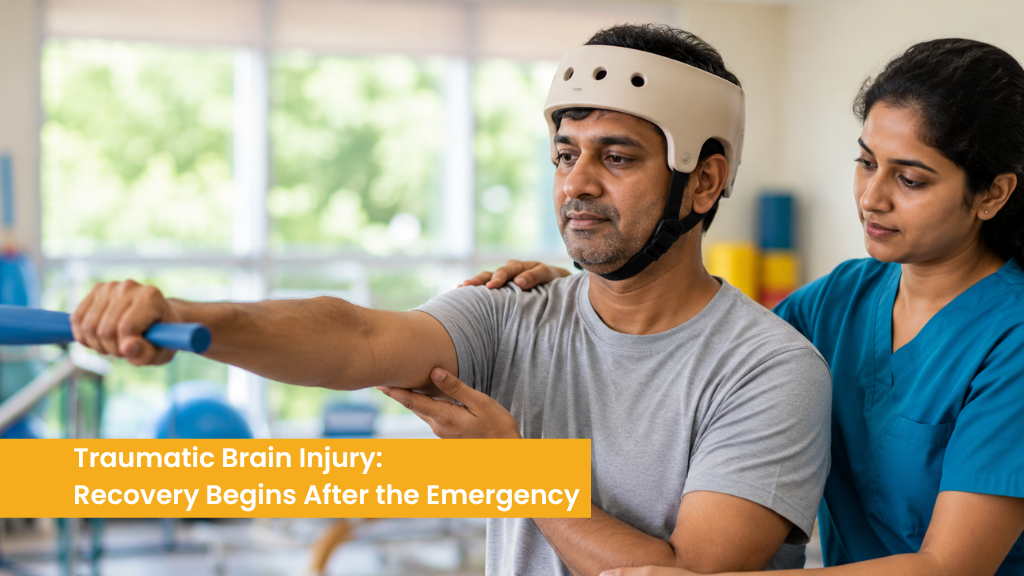
When someone survives a traumatic brain injury (TBI), families often breathe a sigh of relief after surgery. It is a major milestone, but it is not the end of the journey. Recovery from a brain injury is a gradual process that requires expert rehabilitation, patience, and consistent support from both healthcare professionals and loved ones.
“A Traumatic Brain Injury (TBI) is not defined by the completion of surgery.”
Dr. Harish N Jeyavel, Clinical and Quality Head
This simple statement highlights one of the biggest misconceptions surrounding brain injuries. Surgery may save a person’s life, but rehabilitation is what helps them regain function and improve their quality of life.
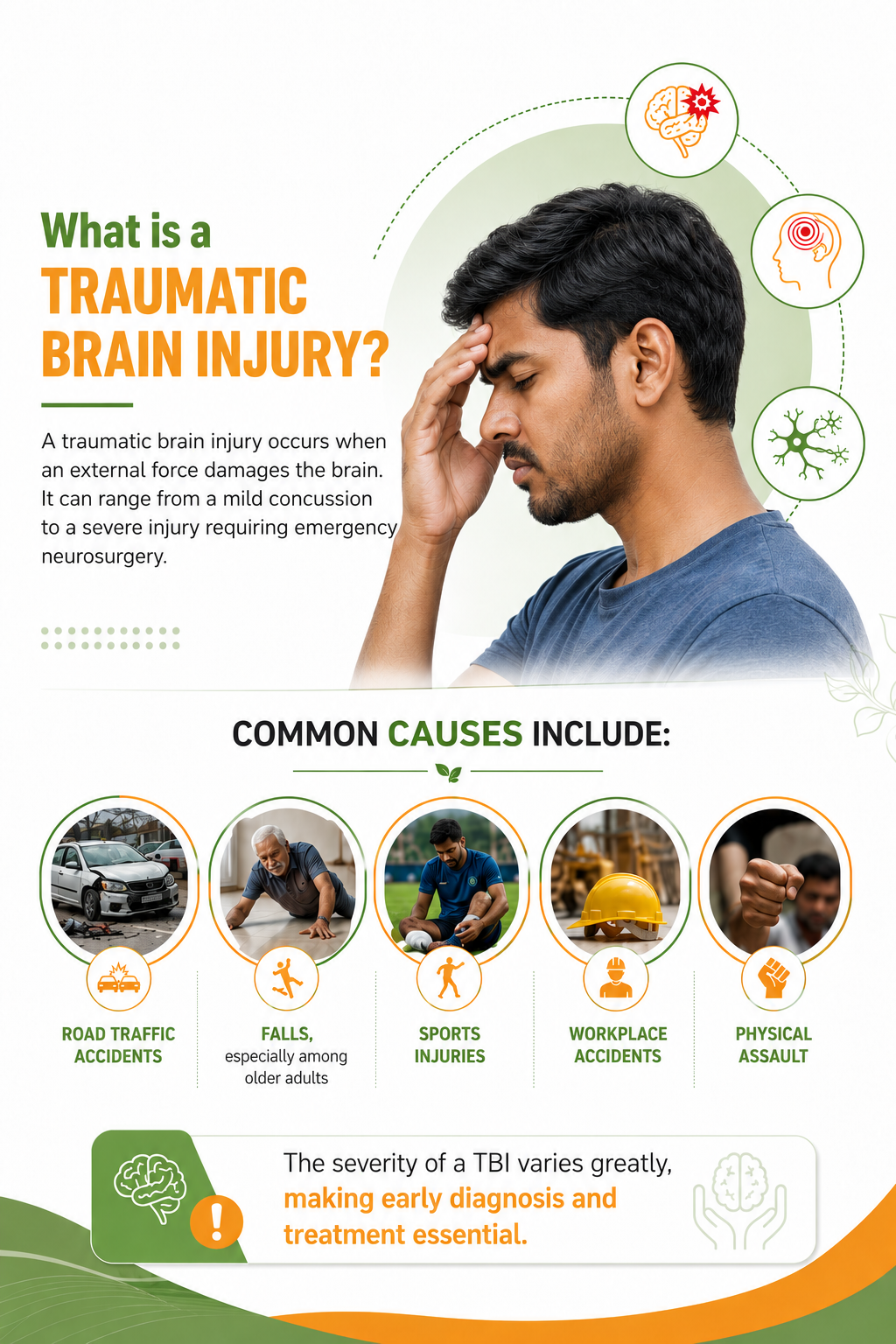
What is a Traumatic Brain Injury?
A traumatic brain injury occurs when an external force damages the brain. It can range from a mild concussion to a severe injury requiring emergency neurosurgery.
Common causes include:
- Road traffic accidents
- Falls, especially among older adults
- Sports injuries
- Workplace accidents
- Physical assault
The severity of a TBI varies greatly, making early diagnosis and treatment essential.
Recognising the Warning Signs
Even a seemingly minor head injury should never be ignored.
Seek immediate medical attention if someone experiences:
- Loss of consciousness
- Persistent vomiting
- Severe headache
- Increasing drowsiness
- Confusion
- Weakness in the arms or legs
- Difficulty speaking
- Seizures
- Bleeding from the nose or ears after a head injury
Prompt medical intervention can be life-saving and may reduce long-term complications.
Surgery is Only One Part of Recovery
Many families believe that a successful surgery means the patient will soon return to normal life. Unfortunately, recovery from a brain injury is far more complex.
Healing depends on how the injured brain recovers over weeks, months and sometimes years. Comprehensive rehabilitation plays a crucial role and may include:
- Physiotherapy
- Occupational therapy
- Speech and swallowing therapy
- Neuropsychological support
- Nutritional guidance
- Skilled nursing care
- Ongoing medical supervision
As Dr. Harish N Jeyavel says:
“Recovery is a continuum that requires timely, multidisciplinary rehabilitation, sustained patient engagement, and consistent family involvement.”
Every Brain Recovers Differently
No two traumatic brain injuries are the same.
Recovery depends on several factors, including:
- Severity of the injury
- Area of the brain affected
- Age of the patient
- Overall health
- Speed of emergency treatment
- Intensity of rehabilitation
- Family involvement
Some patients recover rapidly, while others continue to improve over many months or even years.
Recovery Goes Beyond Physical Movement
Walking again is often seen as the biggest goal, but brain injuries can affect much more than mobility.
Patients may experience difficulties with:
- Memory
- Attention and concentration
- Behaviour and personality
- Mood and emotions
- Sleep
- Speech and communication
- Swallowing
- Balance
- Decision making
These invisible challenges can have a significant impact on everyday life and require specialised rehabilitation.
The Power of Rehabilitation
The brain has an incredible ability to adapt and reorganise itself, a process known as neuroplasticity.
When rehabilitation begins at the appropriate time, patients have a better chance of:
- Regaining mobility
- Improving communication
- Recovering swallowing function
- Performing daily activities independently
- Preventing complications
- Enhancing overall quality of life
Early and consistent rehabilitation gives the brain the best opportunity to heal and adapt.
Families Play a Vital Role
Recovery does not happen through therapy sessions alone. Family members become an important part of the rehabilitation team.
Families can support recovery by:
- Participating in therapy sessions
- Encouraging safe independence
- Celebrating small improvements
- Maintaining daily routines
- Understanding that progress may be gradual
- Staying connected with the healthcare team
Often, recovery is measured through small milestones that gradually add up to meaningful progress.
Supporting the Caregiver
Caring for someone with a traumatic brain injury can be emotionally and physically demanding.
Caregivers may experience:
- Emotional stress
- Burnout
- Financial challenges
- Lifestyle changes
- Uncertainty about the future
Seeking support and practising self-care enables caregivers to continue providing the best possible care for their loved one.
Prevention is Better Than Treatment
Many traumatic brain injuries can be prevented through simple safety measures:
- Always wear a helmet while riding.
- Use seatbelts every time you travel.
- Never drink and drive.
- Take steps to prevent falls in older adults.
- Wear protective equipment at work and during sports.
- Supervise children around heights and unsafe environments.
“With evidence-based rehabilitation initiated at the appropriate time, meaningful functional recovery and neuroplastic adaptation can often exceed initial clinical expectations.”
Dr. Harish N Jeyavel, Clinical and Quality Head
Traumatic brain injury is not simply an emergency—it is a long-term condition that requires coordinated care. Timely medical treatment, expert rehabilitation, active family participation, and patience can make a meaningful difference in recovery and help patients achieve the best possible quality of life.


