


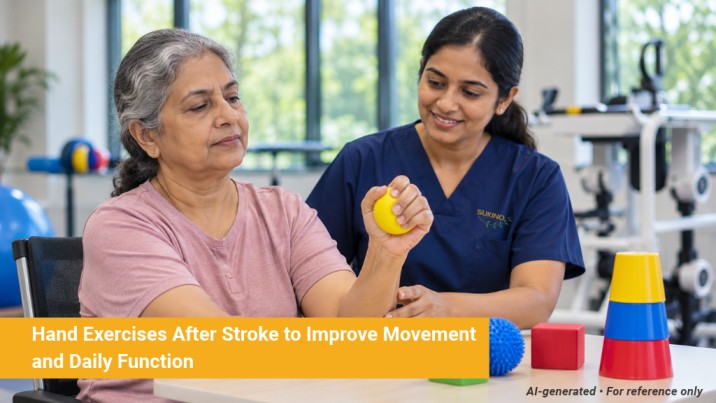
A stroke can affect the way a person moves, feels, and uses their hands. Simple activities such as holding a cup, buttoning a shirt, writing, or using a mobile phone may become difficult due to weakness, stiffness, reduced sensation, or poor coordination.
Hand rehabilitation after stroke focuses on improving movement and helping individuals regain the ability to perform everyday activities as independently as possible. With suitable exercises and regular guidance from a rehabilitation professional, people can work towards better hand control and functional use.
The exercises should always be selected according to the person’s abilities, symptoms, and stage of recovery.
How Does a Stroke Affect Hand Function?
A stroke occurs when blood flow to part of the brain is interrupted or when bleeding damages brain tissue. Since the brain controls movement and sensation, a stroke can affect the arm, wrist, and hand on one side of the body.
Common difficulties include:
- Weakness in the fingers, wrist, or hand
- Difficulty opening or closing the fingers
- Stiffness or increased muscle tightness
- Reduced grip strength
- Difficulty holding and releasing objects
- Changes in sensation and coordination
- Pain, swelling, or fatigue during movement
These challenges can make everyday tasks harder. The extent of hand impairment varies from person to person, so rehabilitation needs to be personalised.
Why Are Hand Exercises Important After a Stroke?
Hand exercises are an important part of stroke rehabilitation because they encourage movement, support muscle activation, and help individuals practise tasks that are relevant to daily life.
The brain has the ability to adapt by strengthening existing connections and developing new ways to support movement. This process is known as neuroplasticity. Repeated and meaningful practice can support this adaptation.
The goals of hand rehabilitation may include:
- Improving finger and wrist movement
- Maintaining joint flexibility
- Developing better grip and release control
- Improving hand coordination and dexterity
- Supporting independence in daily activities
- Building confidence in using the affected hand
Progress varies depending on stroke severity, general health, and individual recovery. Even small improvements, such as holding an object more securely, can make a meaningful difference.
Effective Hand Exercises for Stroke Rehabilitation
A hand exercise programme should begin with an assessment by a qualified physiotherapist or occupational therapist. The professional can recommend suitable movements based on the person’s strength, sensation, muscle tone, and comfort.
The following are examples of exercises that may be included in a rehabilitation programme.
- Gentle Finger Stretching
Finger stretching may help maintain comfortable movement, especially when the fingers feel stiff or tend to curl.
Rest the forearm on a supported surface. Slowly try to straighten the fingers. If independent movement is difficult, the unaffected hand may gently assist, as advised by a therapist.
Avoid forcing the fingers or stretching into pain.
- Finger Opening and Closing
Place the affected hand comfortably on a table or supported surface. Try to open the fingers slowly and then bring them together again.
If the movement is difficult, assistance may be needed. A soft rolled towel can also be used to support the hand while practising gentle opening and relaxing movements.
- Wrist Movement Exercises
Wrist mobility exercises can help maintain comfortable movement.
With the forearm supported, slowly move the wrist upwards and downwards within a comfortable range. Keep the movement controlled and avoid sudden or forceful motions.
A therapist can demonstrate the correct position and movement based on the person’s ability.
- Soft Ball or Sponge Squeezing
For individuals who can safely grasp objects, squeezing a soft sponge or foam ball may help practise grip control.
Place the soft object in the palm, gently close the fingers around it, and then practise releasing it.
The ability to release an object is just as important as gripping it. Avoid hard balls or strong resistance unless recommended by a rehabilitation professional.
- Thumb-to-Finger Touch
This exercise focuses on finger coordination and fine motor control.
Slowly try to touch the thumb to the index finger, followed by the middle, ring, and little fingers. Move at a comfortable pace and use assistance if required.
The goal is controlled movement rather than speed.
- Object Transfer Practice
Place a few lightweight objects, such as foam blocks, on a stable table. Practise picking them up and moving them from one container to another.
This activity encourages grasping, releasing, and controlled hand movement. Start with larger objects that are easier to hold and gradually adjust the task with professional guidance.
How Can Everyday Activities Support Hand Recovery?
Rehabilitation does not need to involve only isolated exercises. Everyday activities can also provide meaningful opportunities to practise hand movements.
Depending on the person’s abilities and safety, activities may include:
- Holding a lightweight cup
- Folding a small towel
- Holding a washcloth
- Turning over large playing cards
- Stacking lightweight cups
- Helping guide a sleeve while dressing
The affected hand can initially assist with simple tasks while the unaffected hand performs the main movement.
Family members and caregivers can support practice by providing encouragement, allowing enough time, and helping maintain a safe environment. Activities should never become a source of pressure or frustration.
Tips for Practising Hand Exercises Safely
Consistency is important, but exercises should not cause unnecessary strain. Keep these points in mind:
- Follow the exercise plan recommended by the rehabilitation professional.
- Practise in a comfortable seated position with the arm supported.
- Begin with movements that are manageable.
- Take breaks when fatigue develops.
- Avoid forcing stiff fingers or painful joints.
- Monitor the hand for swelling, discomfort, or skin irritation.
- Do not use resistance equipment without professional guidance.
People with reduced sensation should be particularly careful with hot objects and sharp items, as injuries may not be noticed immediately.
Stop an activity and seek professional advice if it causes increasing pain, persistent swelling, or a noticeable decline in hand function.
Have Questions About Your Loved One's Recovery?
Ask a Rehabilitation Expert →Stroke Hand Rehabilitation at Sukino Healthcare
Recovering hand function after a stroke can take time, and each person’s rehabilitation needs are different. A structured rehabilitation programme can help identify movement limitations, set realistic goals, and select suitable exercises.
For individuals looking for stroke rehabilitation in Bengaluru, Sukino Healthcare focuses on rehabilitation and recovery support. The appropriate programme should be based on an individual’s assessment, functional needs, and clinical recommendations.
With guidance from a rehabilitation team, hand exercises can be incorporated into a broader recovery plan aimed at improving movement and participation in everyday activities.
Frequently Asked Questions
Yes. Some people experience improvements in hand movement through rehabilitation and repeated, meaningful practice. The extent and pace of recovery vary depending on the severity of the stroke and individual health factors.
Depending on individual ability, exercises may include finger stretching, opening and closing the hand, wrist movements, soft sponge squeezing, thumb-to-finger touching, and object transfer activities.
The frequency and number of repetitions should be recommended by a physiotherapist or occupational therapist. Short, regular practice sessions may be easier to manage than prolonged sessions, particularly when fatigue is present.
Suitable exercises may help improve grip control and the ability to hold and release objects. The exercises should match the person’s current strength and movement ability.
Stroke-related muscle weakness, increased muscle tone, and stiffness can make it difficult to straighten the fingers. A rehabilitation professional can assess the cause and recommend appropriate movement and positioning strategies.
Yes. Safe activities such as folding towels, holding lightweight objects, and moving large objects between containers can provide opportunities to practise useful hand movements.
The timing depends on the person’s medical stability and clinical condition. Hand rehabilitation should begin under guidance from the treating healthcare and rehabilitation team.
Conclusion
Hand exercises can play an important role in stroke rehabilitation by supporting movement, coordination, and everyday hand function. Activities such as finger stretching, grip practice, wrist movements, and object transfer can be included in an individualised programme.
Recovery is different for everyone, and progress may happen gradually. With appropriate professional guidance, regular practice, and support from caregivers, individuals can continue working towards greater hand function and independence.


