

A brain stroke can affect a person’s ability to walk, communicate, maintain balance, and perform everyday activities. Tasks such as getting out of bed, dressing, eating, or holding objects may become difficult due to muscle weakness, reduced coordination, or changes in brain function.
Brain stroke rehabilitation helps individuals work towards regaining functional abilities and improving independence after a stroke. A personalised recovery programme may include physical therapy, occupational therapy, speech therapy, and advanced robotic physiotherapy, depending on the patient’s condition.
With appropriate medical care, guided rehabilitation, and consistent practice, stroke survivors can work towards improving their mobility and daily functioning.
How Does a Brain Stroke Affect the Body?
A stroke occurs when blood flow to part of the brain is interrupted or when a blood vessel ruptures and causes bleeding. This can damage brain cells and affect the functions controlled by the affected area.
Common effects include:
- Weakness or paralysis on one side of the body
- Difficulty walking, standing, or maintaining balance
- Problems with speech and communication
- Difficulty swallowing
- Reduced hand and arm coordination
- Memory and concentration difficulties
- Fatigue and emotional changes
The effects vary from person to person. Rehabilitation should therefore address individual symptoms, functional limitations, and recovery goals.
Why Is Rehabilitation Important After a Stroke?
Stroke rehabilitation focuses on improving movement, coordination, communication, and the ability to perform daily activities.
The brain has an ability to adapt by strengthening existing connections and developing new ways to support certain functions. This is called neuroplasticity. Repeated and meaningful practice during rehabilitation can support this process.
The main goals of stroke rehabilitation include:
- Improving muscle strength and movement
- Developing better balance and coordination
- Supporting speech and communication
- Improving hand and arm function
- Making everyday activities easier
- Supporting confidence and independence
Recovery takes time, and even small improvements, such as holding an object more securely or walking with less assistance, can make a meaningful difference.
Types of Rehabilitation Therapies After a Stroke
A stroke recovery programme may involve different therapies depending on the patient’s symptoms and rehabilitation goals.
- Physical Therapy
Physical therapy helps improve muscle strength, balance, coordination, mobility, and walking ability.
A physiotherapist may guide patients through standing exercises, gait training, balance activities, muscle strengthening, and safe movement practice.
- Occupational Therapy
Occupational therapy focuses on helping individuals regain skills needed for everyday activities, such as dressing, grooming, eating, holding objects, and using their hands.
Therapists may also recommend adaptive equipment and changes to daily routines to support greater independence.
- Speech and Swallowing Therapy
Some stroke survivors experience difficulty speaking, understanding language, or swallowing.
Speech-language therapy may help improve communication. When swallowing is affected, a qualified professional can assess swallowing safety and recommend suitable techniques or dietary modifications.
- Cognitive Rehabilitation
A stroke can affect memory, attention, concentration, and problem-solving abilities. Cognitive rehabilitation may involve structured activities that help individuals practise these skills and manage everyday tasks more effectively.
Can Advanced Robotic Physiotherapy Help After a Stroke?
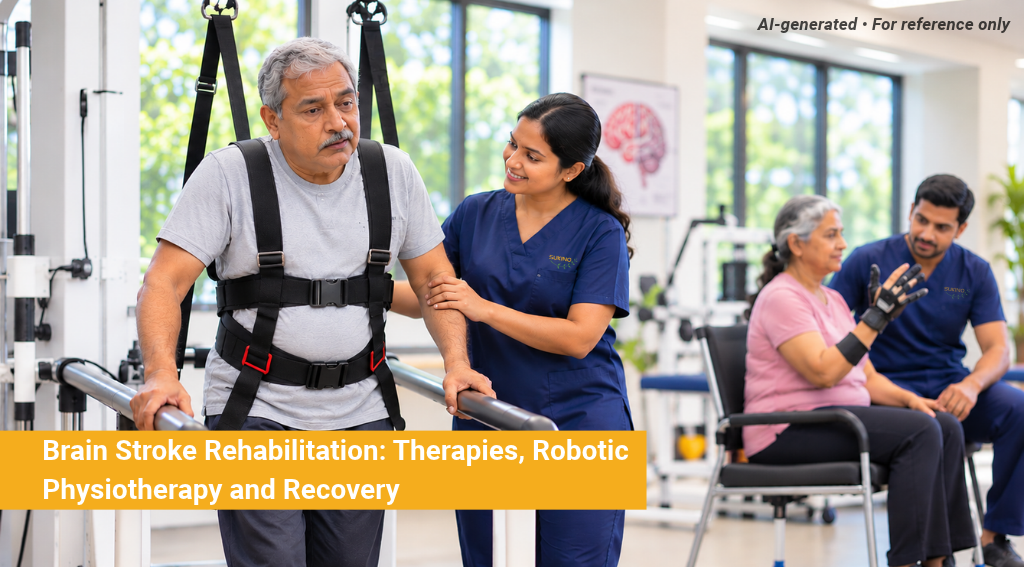
Yes. Advanced robotic rehabilitation can support selected stroke survivors, particularly those experiencing difficulty with walking, balance, coordination, or upper and lower limb movement.
Robotic rehabilitation systems provide controlled, repetitive, and assisted movements during therapy. This allows patients to practise specific movements with guidance from rehabilitation professionals.
At Sukino Healthcare, advanced rehabilitation technologies may be incorporated into an individualised stroke recovery programme.
Some examples include:
- Robotic Assisted Gait Trainer (RAGT)
RAGT supports walking practice through dynamic body-weight-supported gait training. It may help selected patients practise walking patterns, improve balance, and build walking confidence.
- Robotic Hand Rehabilitation Glove
This wearable device assists controlled finger and hand movements. It may support repetitive hand exercises, range of motion, and functional hand rehabilitation.
- Functional Electrical Stimulation (FES)
FES uses electrical stimulation to activate selected muscles. In suitable patients, it may support muscle re-education, gait training, and rehabilitation of foot drop.
- Active and Passive Rehabilitation Trainers
These devices provide assisted or active movement exercises for the arms and legs. They may help patients practise controlled movements, support mobility, and work on muscle activation.
Robotic physiotherapy is not suitable for every stroke survivor. A clinical assessment is necessary to determine the appropriate technology, exercise intensity, and rehabilitation goals.
Explore Sukino’s Advanced Robotic Rehabilitation Technology to learn more about the available systems.
6 Tips to Support Recovery After a Brain Stroke
Rehabilitation continues beyond scheduled therapy sessions. Patients and caregivers can support recovery by following professional recommendations.
- Follow a personalised rehabilitation plan: Attend therapy sessions and practise the exercises recommended by the rehabilitation team.
- Set realistic goals: Start with manageable activities and gradually work towards more challenging tasks.
- Maintain balanced nutrition: Follow a suitable diet based on the patient’s health and swallowing ability.
- Create a safer home environment: Keep walking paths clear and arrange frequently used objects within easy reach.
- Support emotional well-being: Encourage communication and seek professional support when needed.
- Allow sufficient rest: Balance therapy and daily activities with adequate rest to manage post-stroke fatigue.
Have Questions About Your Loved One's Recovery?
Ask a Rehabilitation Expert →How Can Family Members Support Stroke Rehabilitation?
Family members and caregivers play an important role in the recovery process. They can encourage therapy participation, help maintain daily routines, learn safe movement techniques, and provide emotional support.
Caregivers should follow the rehabilitation team’s instructions when assisting with walking, transfers, exercises, or daily activities. They should also look after their own well-being and seek assistance when necessary.
Stroke Rehabilitation at Sukino Healthcare
Stroke recovery often requires a coordinated approach involving physical therapy, occupational therapy, speech and swallowing support, and advanced rehabilitation technology where clinically appropriate.
Sukino Healthcare provides rehabilitation support across Bengaluru, Kochi, Coimbatore, and Kozhikode.
In Bengaluru, patients and families can explore Sukino’s centres at Koramangala, HSR Layout, Bannerghatta Road, Kanakapura Road, Sarjapura, Whitefield, Electronic City, and Manyata Hebbal.
Sukino also has centres in Kochi and Kozhikode in Kerala, and Coimbatore in Tamil Nadu.
For individuals looking for a stroke rehabilitation or neuro rehabilitation centre, the appropriate treatment plan and available technology should be discussed with the clinical team at the nearest centre.
The focus is on improving functional abilities, supporting mobility, and helping stroke survivors work towards greater independence through personalised rehabilitation.
Frequently Asked Questions
Brain stroke rehabilitation is a structured recovery process that helps individuals improve movement, communication, coordination, and everyday functioning after a stroke.
Yes. Robotic rehabilitation may support walking, balance, coordination, and upper and lower limb movement in selected stroke survivors. Suitability depends on the patient’s condition and clinical assessment.
Robotic gait training uses specialised systems to assist walking practice through controlled and repetitive movements. It may help selected patients work on walking patterns, balance, and mobility.
Certain technologies, such as robotic hand rehabilitation gloves, can assist repetitive finger and hand movements. They may be included in a rehabilitation programme when appropriate.
Rehabilitation may begin once the medical team confirms that the patient is medically stable. The timing and intensity depend on the individual’s condition.
There is no fixed recovery timeline. Progress depends on stroke severity, overall health, functional abilities, and response to rehabilitation.
Sukino Healthcare has rehabilitation centres across Bengaluru, Kochi, Coimbatore, and Kozhikode. Patients and families can contact their nearest centre to enquire about available rehabilitation services.


