


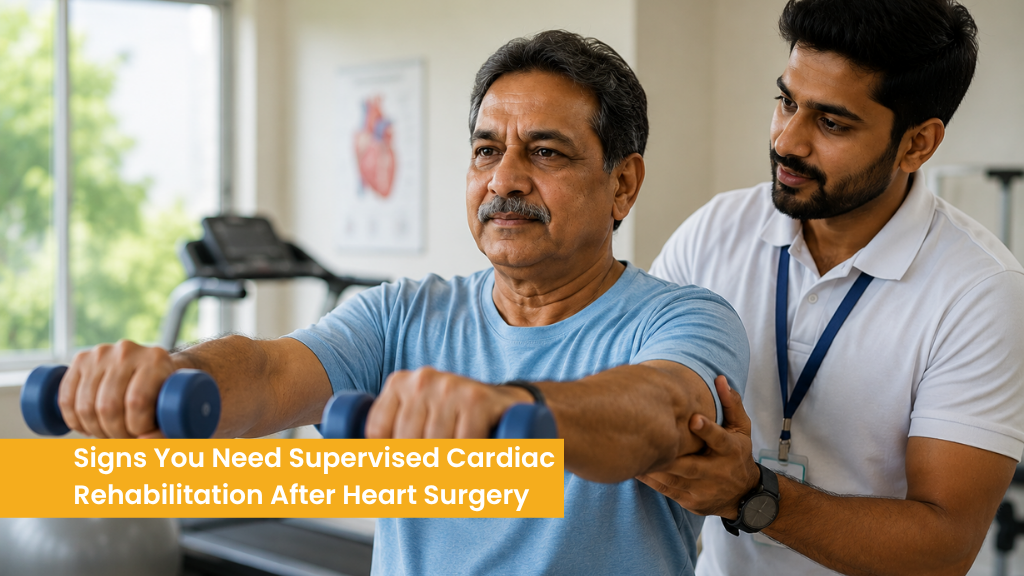
Being discharged after heart surgery is a major milestone. But for many patients, going home does not mean they have fully recovered.
After bypass surgery, valve replacement, angioplasty or another cardiac procedure, it is common to experience weakness, tiredness and reduced mobility. Some patients recover steadily at home with regular follow-up. Others may need a more structured recovery plan with supervised cardiac rehabilitation.
The question is: How do you know if you need it?
Here are some common signs that you or your loved one may benefit from supervised cardiac rehabilitation.
Important: These signs do not replace medical advice. The treating cardiologist should always guide decisions about rehabilitation and the appropriate level of activity.
You Feel Extremely Weak After Leaving the Hospital
Feeling tired after heart surgery is common. However, some patients remain significantly weak after discharge, especially after a prolonged hospital or ICU stay.
Simple activities such as getting out of bed, bathing, dressing or walking short distances may feel exhausting.
Supervised rehabilitation can help patients gradually rebuild strength through a personalised programme rather than trying to return to normal activity too quickly.
Walking Feels Difficult or You Need Assistance
Walking is an important part of recovery, but not every patient is ready to walk independently after discharge.
You may benefit from supervised rehabilitation if you:
- Need help getting out of bed or standing
- Feel unsteady while walking
- Tire quickly after short distances
- Need support from another person or a walking aid
- Have lost confidence in your mobility
Physiotherapy can help improve strength, balance and walking ability gradually.
You Are Unsure How Much Exercise Is Safe
One of the most common concerns after heart surgery is knowing how much activity is appropriate.
Some patients are afraid to move too much because they worry about harming their heart. Others may try to do too much too soon.
A supervised cardiac rehabilitation programme provides a structured approach. Physical activity is progressed based on the patient’s condition, recovery and response to exercise.
You Have Other Medical Conditions That Affect Recovery
Recovery can be more complex when a patient also has conditions such as:
- Diabetes
- High blood pressure
- Kidney disease
- Respiratory problems
- Reduced heart function
- Other long-term health conditions
These conditions may affect exercise tolerance and the overall recovery plan.
A multidisciplinary rehabilitation approach can help address different aspects of recovery in a coordinated way.
You Had a Long ICU or Hospital Stay
Patients who spend an extended period in the ICU or hospital may lose muscle strength and physical endurance.
Even when the heart procedure has been successful, prolonged bed rest can make it difficult to return immediately to normal activities.
Rehabilitation can focus on rebuilding mobility, strength and independence step by step.
You Are StrugglingWithEveryday Activities
You may need additional rehabilitation support if you require help with:
- Bathing and dressing
- Walking around the home
- Getting in and out of bed
- Using the stairs
- Managing basic daily activities
The goal of rehabilitation is not simply to improve exercise capacity. It is also to help patients regain the ability to manage everyday life safely and independently.
You Have Lost Confidence After Heart Surgery
Recovery is not only physical.
Many patients become anxious about physical activity after a major cardiac procedure. They may worry about walking too far, climbing stairs or returning to their previous routine.
This fear can lead to reduced activity, which may slow down physical recovery.
A structured rehabilitation programme can help patients rebuild confidence as they progress through activities safely and gradually.
Your Family Is Unsure How to Manage Your Recovery at Home
Family members often take on a significant caregiving role after heart surgery.
They may be unsure about:
- How much the patient should walk
- How to support exercises
- When the patient can manage activities independently
- What changes should be reported to the doctor
If the family is unable to provide the required level of support, supervised rehabilitation can provide additional clinical and professional guidance during the recovery period.
Your Treating Cardiologist Recommends Rehabilitation
This is one of the clearest signs that supervised cardiac rehabilitation may be appropriate.
Your treating cardiologist understands the details of your heart condition and procedure and can advise whether you need structured rehabilitation, when it should begin and what activities are appropriate.
The rehabilitation team can then develop a personalised plan based on these recommendations.
What Does Supervised Cardiac Rehabilitation Include?
Depending on the patient’s condition, a supervised programme may include:
- Clinical assessment
- Physiotherapy
- Gradual walking and mobility training
- Strength and endurance exercises
- Breathing exercises
- Monitoring of recovery and response to activity
- Nutrition guidance
- Lifestyle education
- Support for managing daily activities
- Caregiver education
Not every patient needs the same level of care. A good rehabilitation programme should be adapted to individual recovery needs.
Who Is More Likely to Need Supervised Rehabilitation?
Supervised cardiac rehabilitation may be particularly useful for:
- Older adults
- Patients recovering after bypass surgery (CABG)
- Patients who have undergone heart valve surgery
- Patients recovering after a heart attack
- People with heart failure
- Patients with multiple medical conditions
- Patients who have experienced prolonged hospitalisation
- People with significant weakness or reduced mobility
The need for rehabilitation should always be assessed individually.
When Should You Seek Medical Help Instead of Waiting for Rehabilitation?
Rehabilitation is not a substitute for urgent medical care.
If you develop sudden or severe symptoms, contact your treating medical team or seek emergency care. Concerning symptoms may include new or worsening chest pain, severe breathlessness, fainting, a significant change in heart rhythm or symptoms of a possible wound infection.
Do not try to manage serious or rapidly worsening symptoms by simply continuing an exercise or rehabilitation programme.
Supervised Cardiac Rehabilitation in Electronic City
For patients recovering from cardiac surgery in and around Electronic City, structured rehabilitation can help bridge the gap between hospital treatment and returning home.
At Sukino Electronic City, rehabilitation plans are personalised according to the patient’s medical condition, mobility and recovery goals. Depending on individual needs, support may include physiotherapy, nursing care, clinical supervision, nutrition guidance and multidisciplinary rehabilitation.
The aim is to help patients regain strength and functional independence while following the recommendations of their treating cardiac team.
Have Questions About Your Loved One's Recovery?
Ask a Rehabilitation Expert →Frequently Asked Questions
No. Some medically stable patients recover well at home with regular follow-up and prescribed exercises. Others may benefit from supervised rehabilitation based on their strength, mobility and overall health.
The timing varies depending on the procedure and the patient’s medical condition. Your treating cardiologist or surgeon can advise when rehabilitation and exercise should begin.
Exercise should be prescribed and progressed according to the patient’s medical condition and the advice of the treating cardiac team. A supervised programme can provide additional support for patients who require structured exercise progression.
Yes. Older adults who experience weakness, reduced mobility or loss of independence after heart surgery may particularly benefit from a personalised rehabilitation programme.
Yes. Rehabilitation can be one stage of the recovery journey. As patients become stronger and more independent, they can continue their recovery at home with an appropriate plan and follow-up.
The Bottom Line
You do not need to wait until recovery becomes difficult to ask whether cardiac rehabilitation is right for you.
If you are struggling with weakness, mobility, everyday activities or confidence after heart surgery, a structured and supervised rehabilitation programme may provide the additional support you need.
The right goal is not simply to recover faster. It is to recover safely, regain independence and return to daily life with greater confidence.
Recover with Structured Support at Sukino
At Sukino Electronic City, our multidisciplinary rehabilitation approach is designed to support patients after hospitalisation and major cardiac procedures.
Depending on individual needs, our rehabilitation programmes can combine physiotherapy, nursing support, clinical supervision and personalised recovery planning to help patients work towards a safe transition back to everyday life.
If you or a loved one is recovering after heart surgery and you are unsure whether supervised cardiac rehabilitation may be appropriate, speak with the Sukino rehabilitation team.


