


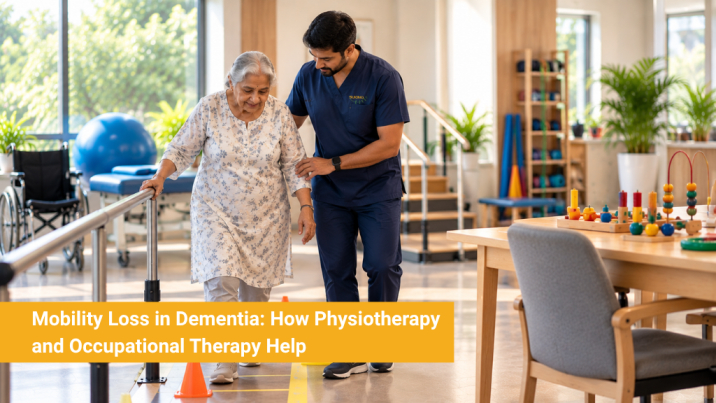
Dementia can affect much more than memory. As the condition progresses, a person may also experience changes in balance, coordination, strength, confidence and the ability to perform familiar activities. These changes can gradually affect mobility and make everyday tasks such as walking, standing, dressing or using the bathroom more difficult.
When a person starts moving less, it can create another problem. Reduced activity may lead to muscle weakness, lower endurance and greater dependence on caregivers. This can make movement even more difficult.
This is where rehabilitation can play an important role. Physiotherapy and occupational therapy can help people with dementia maintain movement, participate in daily activities and stay as safe and independent as possible.
Why Does Mobility Decline in Dementia?
Lossing Mobility in dementia can happen for several reasons. Changes in memory and attention can make it harder to remember how to perform familiar movements or follow instructions. A person may also become unsure of their surroundings or develop a fear of falling.
Physical changes can contribute as well. Reduced activity may lead to muscle weakness, while stiffness, poor balance, previous injuries or other health conditions can make walking more difficult.
Some common signs of mobility loss include:
- Walking more slowly than before
- Difficulty getting up from a chair or bed
- Unsteady walking
- Reduced balance
- Taking shorter walking distances
- Difficulty using a walking aid
- Increased dependence on caregivers
- Avoiding activities that involve movement
- More frequent falls
Recognising these changes early can help families understand when additional rehabilitation support may be useful.
Why Maintaining Mobility is Important?
Being able to move around safely is closely connected to independence.
For a person living with dementia, walking to the dining area, getting up from a chair, going to the bathroom or participating in a simple household activity can all be meaningful parts of everyday life.
The goal of rehabilitation is not necessarily to make the person return to their previous level of physical ability. In many cases, the focus is on maintaining the abilities they still have and helping them use those abilities safely.
Even small improvements in movement or participation can make daily routines easier for both the person and their caregiver.
How Can Physiotherapy Help?
Physiotherapy for dementia focuses on maintaining physical function according to the person’s individual abilities and needs.
A physiotherapist may assess strength, balance, flexibility, walking, endurance and the ability to perform movements such as standing or transferring from one surface to another.
Depending on the assessment, therapy may include:
- Strengthening exercises
- Balance activities
- Walking practice
- Range-of-motion exercises
- Transfer training
- Posture and movement exercises
- Endurance activities
- Safe use of mobility aids
The exercises should be simple enough for the person to understand and appropriate for their physical condition. Familiar movements, repetition and clear instructions can make therapy easier to follow.
Where Can Advanced Robotic Physiotherapy Fit In?
For some people with significant difficulty walking, Advanced Robotic Physiotherapy may be considered as part of their rehabilitation programme.
Robotic rehabilitation equipment can provide controlled support during gait and movement training. Depending on the person’s condition, it may allow the therapist to work on areas such as walking patterns, balance, weight shifting, lower-limb movement and gradual weight bearing.
This does not mean that robotic physiotherapy is suitable for everyone with dementia. The rehabilitation team needs to consider the person’s mobility, strength, balance, cognitive abilities and overall health before deciding whether this approach is appropriate.
The technology is there to support therapy. The therapist remains an important part of deciding how the equipment is used and how the rehabilitation programme progresses.
What Does Occupational Therapy Do?
While physiotherapy focuses more on physical movement, occupational therapy for dementia looks at how a person manages everyday activities.
A person may have enough physical strength to perform a task but still struggle because they have difficulty remembering the sequence of steps involved.
An occupational therapist can work with the person on activities such as:
- Dressing
- Eating
- Grooming
- Bathing
- Toileting
- Moving around the home
- Using everyday objects
- Participating in simple routines
Instead of expecting the person to complete a complicated activity all at once, the therapist may break it into smaller, easier steps.
For example, getting dressed can be divided into simple actions that are completed one at a time. This can make the activity less confusing and allow the person to participate rather than having the caregiver do everything for them.
Have Questions About Your Loved One's Recovery?
Ask a Rehabilitation Expert →How Do Physiotherapy and Occupational Therapy Work Together?
Mobility and daily activities are closely connected.
Consider a person who has difficulty walking from their bedroom to the bathroom. Physiotherapy may focus on leg strength, balance, transfers and safe walking. Occupational therapy may look at the bathroom setup, the sequence of the task and ways to make the activity easier and safer.
Together, the two therapies address both how the person moves and how they use that movement in everyday life.
This can make rehabilitation more meaningful because the focus is not only on exercises but also on activities that matter to the person’s daily routine.
When Should a Person With Dementia Have a Rehabilitation Assessment?
A rehabilitation assessment may be useful when a person begins to experience noticeable changes in physical function.
Families should consider seeking professional guidance if they notice:
- Frequent falls
- Increasing difficulty walking
- Trouble getting out of a chair
- Difficulty transferring from bed to chair
- Reduced participation in daily activities
- Increasing dependence on caregivers
- Difficulty using a walking aid
- Changes in balance or walking confidence
- Reduced physical activity
An assessment can help identify the person’s current abilities and determine what type of physiotherapy, occupational therapy or other rehabilitation support may be appropriate.
Frequently Asked Questions
Physiotherapy cannot cure dementia, but it can help maintain physical abilities such as strength, balance, walking and functional movement.
Occupational therapy helps people participate in everyday activities such as dressing, eating, bathing and moving around safely. Therapists can also suggest ways to simplify tasks and routines.
No. Its suitability depends on the person’s physical condition, mobility, cognitive abilities, rehabilitation goals and overall health. A rehabilitation professional should assess the individual before recommending it.
Appropriate physical activity can help maintain strength, balance and functional movement. Exercise should be adapted to the person’s abilities and health condition.
Rehabilitation goals can change as dementia progresses. Therapy may focus more on maintaining existing abilities, comfort, safe movement and participation in everyday activities.
Conclusion
Mobility loss in dementia can affect much more than walking. It can influence independence, daily routines, confidence and the amount of support a person needs from caregivers.
Although physiotherapy and occupational therapy cannot reverse dementia, they can help address many of the physical and functional difficulties that accompany the condition. Physiotherapy can support strength, balance and mobility, while occupational therapy can help a person continue participating in everyday activities.
For selected people with significant mobility difficulties, Advanced Robotic Physiotherapy may also be incorporated into rehabilitation when clinically appropriate.
The goal is not always to restore everything a person could do before. Sometimes, meaningful rehabilitation means helping someone continue walking to the dining area, stand safely from a chair, participate in dressing or remain involved in familiar daily routines.
Maintaining movement, safety and participation can remain valuable at every stage of dementia.


