


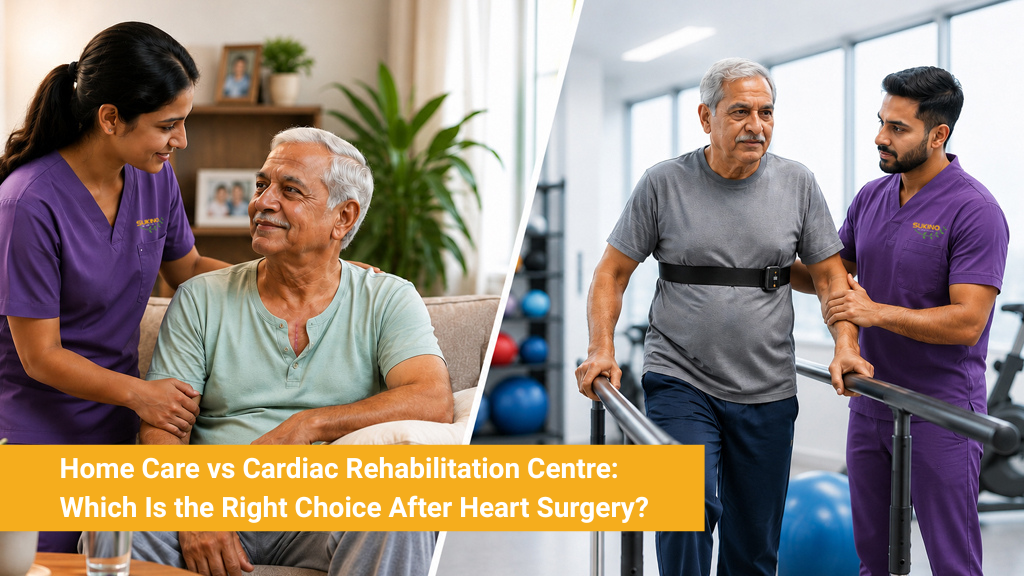
Home Care vs Cardiac Rehabilitation Centre
Aspect | Home Care | Cardiac Rehabilitation Centre |
|---|---|---|
Medical supervision | Regular follow-up with your cardiologist | Ongoing monitoring by a multidisciplinary rehabilitation team |
Exercise | Self-guided or occasional physiotherapy | Structured and supervised cardiac rehabilitation program |
Physiotherapy | Separate home visits if arranged | Daily, goal-based physiotherapy integrated into recovery |
Clinical monitoring | Family observes symptoms | Regular assessment of blood pressure, heart rate, oxygen levels and recovery progress |
Management of other conditions | Depends on caregivers | Coordinated care for diabetes, hypertension, respiratory illness and more |
Nutrition guidance | Separate consultations | Included as part of rehabilitation |
Caregiver support | High involvement from family | Clinical team supports both patient and caregivers |
Best suited for | Stable patients with adequate family support | Patients requiring supervised recovery and multidisciplinary care |
Important: Home care and cardiac rehabilitation are not competing options. The most appropriate recovery plan depends on the patient’s medical condition and should always be decided in consultation with the treating cardiologist.
When Is Home Care a Good Option?
- Your cardiologist confirms you are medically stable.
- You can walk independently.
- You are able to perform most daily activities safely.
- There are no significant post-operative complications.
- A family member or caregiver is available to assist you.
- You can attend scheduled follow-up appointments.
- Your prescribed rehabilitation exercises can be performed safely.
When Should You Consider a Cardiac Rehabilitation Centre?
- Have undergone bypass surgery (CABG)
- Have had heart valve repair or replacement
- Are recovering after a heart attack
- Have heart failure
- Are above 65 years of age
- Have diabetes, hypertension or kidney disease
- Experienced a prolonged ICU stay
- Feel weak while walking or performing daily activities
- Need supervised physiotherapy
- Do not have adequate caregiving support at home
What Happens in a Cardiac Rehabilitation Centre?
Why Structured Cardiac Rehabilitation Matters
- Improved physical strength
- Better mobility
- Improved exercise tolerance
- Increased confidence
- Better management of blood pressure and diabetes
- Reduced risk of complications
- Improved quality of life
- Safer transition back to everyday activities
Can Patients Continue Recovery at Home Later?
Looking for Cardiac Rehabilitation in Electronic City?
FAQs
Yes. Many patients recover safely at home if they are medically stable, have good family support and follow their cardiologist’s advice. Some patients may benefit from supervised cardiac rehabilitation depending on their condition.
Cardiac rehabilitation is recommended for many patients because it helps improve physical recovery, supports heart health, promotes safe exercise and reduces the risk of future complications.
Patients recovering from bypass surgery, valve replacement, heart attack, heart failure, prolonged ICU stays or those with multiple medical conditions often benefit from supervised rehabilitation.
The duration varies depending on the patient’s condition, recovery goals and the advice of the treating cardiologist. Rehabilitation programs are personalised for every patient.
Many elderly patients recover well at home. However, those with reduced mobility, multiple health conditions or limited caregiver support may benefit from structured rehabilitation before returning home.


